

Distributor

EMC Engineering Partner

Measurement Technology
Our Measurement Equipment
The Right EMC Noise Scanner for Your Test Object
Our EMC noise scanning service uses two Morita-Tech measurement systems to investigate electromagnetic noise in different types of devices under test (DUTs). The WM7400 is suited to smaller DUTs that can be securely positioned on a measurement table, while the portable WM9500αLT is suited to larger objects such as electric vehicles (EVs) and equipment that is difficult to move.

WM7400
Desktop EMC Noise Scanner
The WM7400 is a desktop EMC noise scanning system designed for investigating electromagnetic noise on PCBs, electronic modules, and other compact devices that can be securely positioned on a measurement table.
Typical Measurement Targets
- Printed circuit boards (PCBs)
- Electronic control boards
- Power supply boards and modules
- Small electronic devices
- Compact electronic assemblies
Why choose WM7400?
When a DUT can be placed and secured on
the measurement table, the WM7400 enables
systematic near-field scanning and
visualization of electromagnetic noise
distributions across the selected area.
This helps engineers investigate
potential EMI sources before external
EMC laboratory testing.
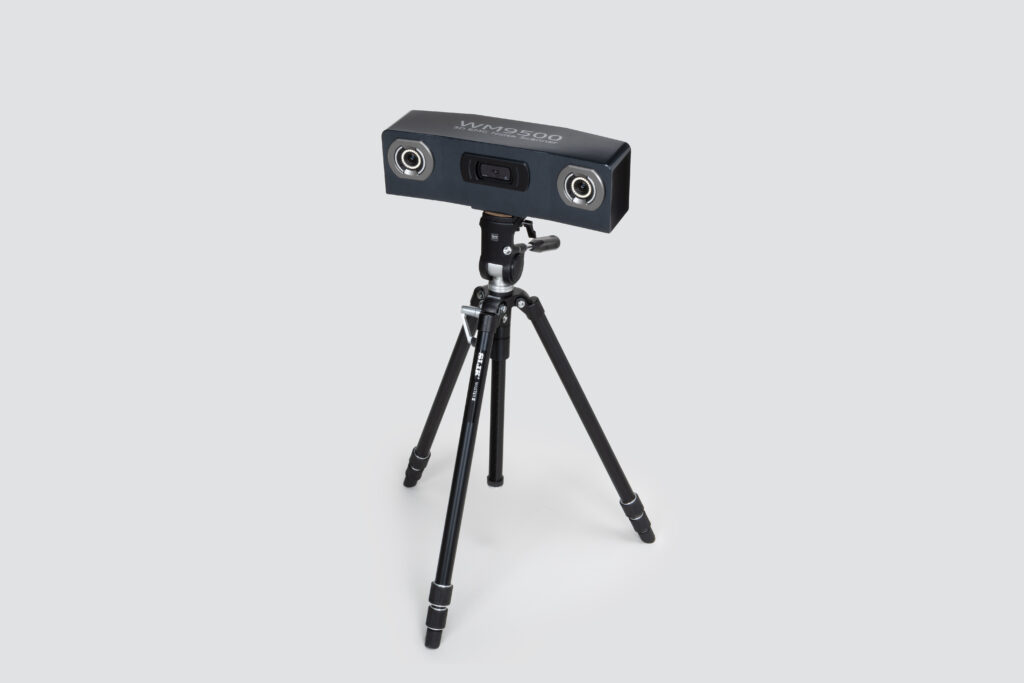
WM9500αLT
Portable EMC Noise Scanner
The WM9500αLT is a portable EMC noise scanning system suited to investigating electromagnetic noise around large devices, vehicles, and equipment that cannot easily be placed on a measurement table. Its portable configuration allows the measurement system to be brought closer to the DUT.
Typical Measurement Targets
- Electric vehicles (EVs)
- Large electronic assemblies
- Industrial machinery and equipment
- Large power electronics systems
- Equipment that is difficult to relocate
Why choose WM9500αLT?
Its portable design makes it possible
to investigate selected areas of large
or difficult-to-move DUTs without
placing the entire object on a desktop
scanner. This supports localized
EMI troubleshooting on vehicles,
machinery, and other large systems.
Which Scanner Is Suitable for Your DUT?
Small, Table-Mounted DUT → WM7400
Recommended when the PCB, electronic module, or compact device can be securely positioned on the scanner's measurement table.
Large or Hard-to-Move DUT → WM9500αLT
Recommended when the DUT is too large for a desktop system or when portable measurement access is important, such as for EVs or industrial equipment.
Investigate EMI Before Expensive External Retesting
Whether your DUT is a small PCB or a large electrical system, our contract measurement service helps engineers investigate potential electromagnetic noise sources and assess countermeasures before formal EMC testing. This may reduce the risk of costly repeat tests and development delays, without requiring customers to purchase their own scanning equipment.
Scanner selection depends on DUT dimensions, accessibility, measurement objectives, probe configuration, and operating conditions. The suitability of each project is confirmed individually. Near-field EMC noise scanning supports engineering diagnostics and does not replace formal EMC compliance testing.
The Advantage of Noise Visualization
Why Morita-Tech? See Where the Noise Comes From.
A conventional spectrum measurement can show which frequencies contain electromagnetic noise, but it does not necessarily reveal where on the PCB the noise is concentrated. Without spatial information, investigating potential EMI sources may require extensive trial and error.
Morita-Tech EMC Noise Scanners provide a different perspective. Measured near-field noise distributions can be displayed as color-coded maps over an image of the actual device under test (DUT). Engineers can therefore relate electromagnetic activity to physical locations on a PCB or electronic assembly.
This visual information helps engineers focus troubleshooting on relevant areas, evaluate countermeasures, and investigate potential EMC problems before external laboratory testing.
See Where Noise Is Concentrated
Relate measured noise intensity to components, PCB traces, connectors, and other physical areas of interest.
Focus Troubleshooting Efforts
Use spatial noise information to guide engineering investigations instead of relying only on frequency-domain results or trial-and-error modifications.
Evaluate EMC Countermeasures
Compare measurements before and after shielding, filtering, grounding, or PCB design modifications under comparable test conditions.

WM7400 measurement example: color-coded electromagnetic noise visualization.
From Measurement Data to a Visual Noise Map
This example illustrates how measured electromagnetic noise can be visualized in relation to the physical layout of the test object.
Instead of examining frequency data alone, engineers can investigate where elevated near-field noise is detected and use the results to guide further troubleshooting.
Such investigations can help identify areas requiring attention before formal EMC laboratory testing.
View WM7400 Measurement Example →From Noise Visualization to Better EMC Test Preparation
Map near-field electromagnetic noise across selected areas of the DUT.
Examine locations showing elevated noise levels and possible EMI sources.
Compare measurements after suitable engineering countermeasures.
Use the findings to support preparation for external EMC testing.
Additional Morita-Tech Noise Visualization Examples
Depending on the scanner model and measurement configuration, Morita-Tech systems can provide different approaches to visualizing electromagnetic noise distributions. These results support the investigation of noise behavior in electronic products and assemblies.
View an Additional Visualization Example →Measurement images are examples of noise visualization. Available functions depend on scanner model, probes, software, and test configuration. Elevated near-field noise at a particular location does not necessarily establish the root cause of an EMC compliance failure. Near-field scanning does not replace formal EMC testing.
Technical Cooperation
Seika Sangyo & waveLAB Ruhr: EMC Measurement Services in Germany
Seika Sangyo GmbH cooperates with waveLAB Ruhr GmbH to offer contract EMC noise scanning and troubleshooting services using Morita-Tech measurement technology. Our aim is to help engineers investigate potential electromagnetic interference (EMI) sources before external EMC laboratory testing, reducing the risk of costly retesting and development delays.
Seika Sangyo GmbH
As a European distributor of Morita-Tech EMC noise scanners, Seika Sangyo contributes knowledge of the measurement systems, their applications, and suitable equipment configurations.
Seika Sangyo supports customer enquiries, technical discussions, and coordination related to the EMC noise scanning service.
Contact Seika Sangyo →
waveLAB Ruhr GmbH
Based in Essen, Germany, waveLAB Ruhr provides RF and EMC engineering expertise to support electromagnetic noise investigations and troubleshooting.
The cooperation combines Morita-Tech scanning technology with practical engineering support for investigating potential EMI sources and reviewing measurement findings.
Visit waveLAB Ruhr →How Our EMC Noise Scanning Service Works
From the initial enquiry to the review of measurement results, the scope is discussed individually to match your device under test (DUT), engineering objectives, and project requirements.
Initial Enquiry
Contact Seika Sangyo or waveLAB Ruhr. Describe your DUT, the EMC issue, any relevant test results, and what you would like to investigate.
Technical Review
We review DUT dimensions, accessibility, target frequencies, operating conditions, and measurement feasibility. The suitability of WM7400 or WM9500αLT and the measurement location are assessed for the project.
Quotation & Measurement
The proposed measurement scope, location, schedule, deliverables, and quotation are agreed before testing. Noise scanning is then performed according to the agreed conditions.
Results & Discussion
Review the measured noise distributions and areas of interest. Receive the documentation agreed for the project and discuss possible next steps for further EMC investigation.
What Information Should You Provide?
To help us assess your measurement request, please share the following information where available:
Investigate EMC Issues Before the Next Laboratory Test
A failed external EMC test may lead to additional laboratory appointments, design modifications, and development delays. Our EMC noise scanning service provides an opportunity to investigate potential noise sources and assess engineering countermeasures before formal testing or retesting. This can help reduce the risk of unnecessary repeat laboratory visits.
Discuss Your EMC Measurement Project
Whether you need to investigate noise on a small PCB or examine selected areas of a larger system such as an EV, contact us to discuss measurement feasibility, suitable equipment, and an individual quotation.
Measurement feasibility, location, equipment selection, schedule, and deliverables are confirmed individually. Portable equipment does not automatically imply availability of on-site measurement at every customer location. EMC noise scanning supports engineering diagnostics and does not replace formal compliance testing. Cost savings and test outcomes cannot be guaranteed.
Frequently Asked Questions
EMC Noise Scanning Services: Frequently Asked Questions
Find answers about EMC noise scanning, reducing the risk of costly EMC retesting, PCB noise visualization, suitable test objects, measurement equipment, and requesting our service in Germany.
What is an EMC noise scanning service?
An EMC noise scanning service investigates electromagnetic noise around electronic circuits, printed circuit boards (PCBs), and other devices under test (DUTs). Near-field measurements can be visualized as spatial noise maps to help engineers investigate potential EMI sources.
Our service uses Morita-Tech EMC noise scanners and is available on a project-by-project basis without purchasing the equipment.
Can EMC noise scanning help reduce external EMC testing costs?
Potentially, yes. Investigating possible electromagnetic interference problems before external laboratory testing may reduce the risk of failed tests, repeated laboratory appointments, and additional development work.
The service itself has a cost, and total savings cannot be guaranteed. Its value is in supporting earlier identification and investigation of potential EMC problems.
Can EMC noise scanning replace TÜV or other external EMC laboratory testing?
No. Near-field EMC noise scanning is an engineering diagnostic method. It does not replace formal compliance testing or demonstrate conformity with applicable EMC standards.
It can complement laboratory testing by helping engineers investigate potential noise sources before an external test or after an unsuccessful test result.
Why should I request EMC noise scanning before a laboratory test?
EMC problems discovered late in product development can require additional troubleshooting, design modifications, and repeat testing.
Near-field noise scanning helps engineers examine electromagnetic noise distributions and investigate potential problem areas earlier. This may improve preparation for external EMC testing.
What is the difference between EMC, EMI, and EMF?
EMC (Electromagnetic Compatibility) describes the ability of equipment to function correctly in its electromagnetic environment without causing unacceptable interference.
EMI (Electromagnetic Interference) refers to electromagnetic disturbances that degrade equipment performance.
EMF (Electromagnetic Field) refers to electric and magnetic fields. Suitable near-field probes can investigate aspects of these fields around circuits.
What is near-field EMI scanning?
Near-field EMI scanning measures electromagnetic fields close to a circuit, component, or assembly. Measurements taken at different positions can be used to visualize the spatial distribution of noise.
Unlike conventional compliance measurements, near-field scanning primarily supports local engineering investigation and troubleshooting.
Can the service identify where electromagnetic noise is concentrated on a PCB?
Yes. Morita-Tech EMC noise scanners can visualize measured noise distributions as color-coded maps aligned with images of the DUT.
This helps engineers relate elevated near-field noise to physical locations on the PCB. Additional analysis may be needed to determine the underlying cause of an EMC problem.
Which scanner is suitable for a small PCB or electronic module?
The Morita-Tech WM7400 is a desktop EMC noise scanner suited to PCBs, electronic modules, and compact devices that can be securely positioned on a measurement table.
Final suitability depends on DUT dimensions, accessibility, operating conditions, and measurement objectives.
Can you investigate EMC noise on electric vehicles or large equipment?
The Morita-Tech WM9500αLT is a portable EMC noise scanner suited to investigating selected areas of large or difficult-to-move DUTs, including electric vehicles (EVs), industrial equipment, and large electronic systems.
Measurement accessibility, safety, location, and technical feasibility must be reviewed for each project.
Can measurements be performed at our company site?
Measurement location is discussed individually. The portable WM9500αLT can offer flexibility for large or difficult-to-move DUTs, but on-site measurement availability depends on project requirements, equipment configuration, operating conditions, and logistical feasibility.
Please contact us with information about your DUT and preferred measurement location.
Can EMC noise scanning help after a failed EMC emissions test?
Yes. If an external EMC emissions test indicates a problem, near-field scanning can support investigation of potential noise sources on the PCB or electronic assembly.
The results may help engineers select areas for further analysis and evaluate suitable countermeasures before retesting.
Can I compare noise levels before and after design changes?
Yes. Comparative measurements can support the evaluation of shielding, filtering, grounding, component changes, and PCB layout modifications.
Meaningful comparisons require suitable and consistent measurement and DUT operating conditions.
Can the service measure electric-field and magnetic-field noise?
Electric-field-related and magnetic-field-related noise can be investigated using suitable near-field probes and measurement configurations.
Available measurement quantities, probe options, and frequency ranges are confirmed individually for each project.
Do I need to purchase an EMC noise scanner to use the service?
No. Seika Sangyo GmbH cooperates with waveLAB Ruhr GmbH to offer contract EMC noise scanning services using Morita-Tech equipment.
Customers can request measurements for specific development or troubleshooting projects without purchasing their own scanning system.
What measurement results or reports will I receive?
Depending on the agreed scope, results may include measured noise distributions, visualization images, selected measurement data, and documentation of findings.
The report format, analysis depth, and deliverables are discussed and confirmed before measurement.
What information is needed to request EMC noise scanning?
Please provide the following information where available:
- DUT type and approximate dimensions
- Description of the suspected EMC problem
- Relevant frequencies or previous EMC test results
- DUT power supply and operating conditions
- Preferred measurement location
- Measurement objectives and project timing
Additional requirements can be discussed during the technical review.
How much does an EMC noise scanning service cost?
Pricing depends on the DUT, measurement objectives, equipment configuration, measurement location, test duration, and required analysis or reporting.
Each project is reviewed individually, and a quotation is provided based on the agreed measurement scope.
Where can I request EMC noise scanning services in Germany or Europe?
Companies in Germany and across Europe can contact Seika Sangyo GmbH or waveLAB Ruhr GmbH to discuss EMC noise scanning and troubleshooting requirements.
waveLAB Ruhr is based in Essen, Germany. Measurement location, feasibility, and project arrangements are confirmed individually.
Discuss Your Measurement Project
Request an EMC Noise Scanning Service
Investigate potential EMI sources before your next external EMC laboratory test. Our contract measurement service helps engineers visualize electromagnetic noise, investigate problem areas, and evaluate countermeasures without purchasing specialized scanning equipment.
Whether your DUT is a compact PCB, an electronic module, or a larger system such as an EV, contact us to discuss measurement feasibility and receive an individual quotation.
Seika Sangyo GmbH
Morita-Tech EMC Noise Scanner enquiries, equipment expertise, and measurement service coordination.
Contact Seika Sangyo →
waveLAB Ruhr GmbH
RF and EMC engineering support for noise investigation and troubleshooting. Essen, Germany.
Visit waveLAB Ruhr →Measurement feasibility, equipment selection, location, reporting, pricing, and delivery dates are subject to individual agreement. EMC noise scanning supports engineering diagnostics and does not replace formal compliance testing. Cost savings and EMC test outcomes cannot be guaranteed.