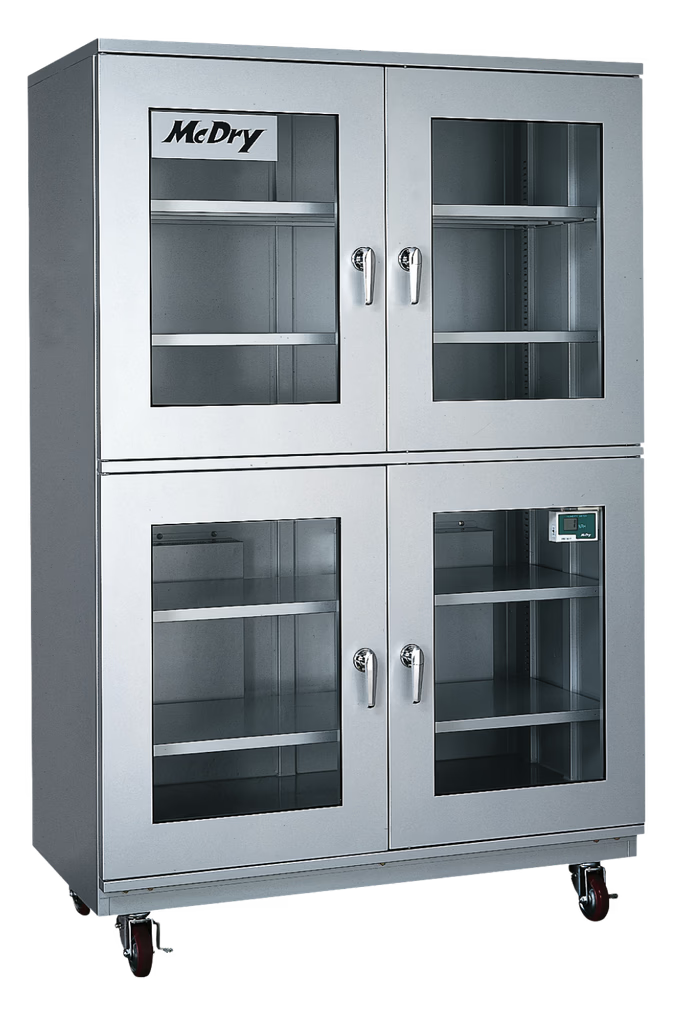
McDry Ultra-Low Humidity Dry Cabinets for SMT & MSD Storage

Reliable dry storage for moisture-sensitive devices, SMD reels, IC packages, PCBs and electronic components used in SMT production.

McDry provides stable low-humidity storage down to 1% RH for moisture-sensitive electronic components, helping control moisture absorption during storage and production.

Proper dry storage supports MSD and floor-life management and can help reduce moisture-related risks such as popcorning, package cracking, unnecessary baking, scrap and rework.

McDry uses a regenerating zeolite drying system and does not require continuous nitrogen supply for standard low-humidity storage.

DXU-1001A Ultra Low Humidity Cabinet

McDry Dry Cabinet Models for MSD and SMT Component Storage

Compare McDry DXU, MC and MCU dry cabinet models for the controlled low-humidity storage of moisture-sensitive devices (MSDs), SMD reels, IC packages, PCB assemblies and electronic components. Choose the cabinet size and configuration that best matches your SMT production volume and component access frequency.

DXU

High-Performance Cabinets for Active SMT Production

Suitable for high-volume MSD storage and SMT production environments where SMD reels, IC packages and electronic components are accessed frequently during production.

McDry DXU-1001A six-door dry cabinet for MSD and SMD storage

DXU-1001A

Approx. 1,200 L

For high-volume storage of SMD reels, IC packages and other moisture-sensitive electronic components with frequent access from multiple door sections.

View DXU Series

McDry DXU-1002A four-door dry cabinet for moisture-sensitive electronic components

DXU-1002A

Approx. 1,200 L

For large-volume MSD and electronic component storage where larger cabinet compartments are preferred for reels, trays and PCB assemblies.

View DXU Series
McDry DXU-501A narrow dry cabinet for SMD reels and IC packages

DXU-501A

Approx. 600 L

For SMT production areas that require frequent access to moisture-sensitive components while keeping the cabinet footprint relatively narrow.

View DXU Series
MC

Large-Capacity Cabinets for MSD Storage

Suitable for large inventories of SMD reels, IC packages, component trays and PCB assemblies where access frequency is moderate and high storage capacity is the priority.
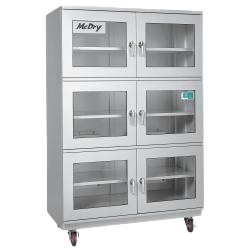
McDry MC-1001A six-door large-capacity cabinet for MSD storage

MC-1001A

Approx. 1,200 L

For large-volume storage of moisture-sensitive electronic components where multiple door sections help limit unnecessary exposure during component retrieval.

View MC Series
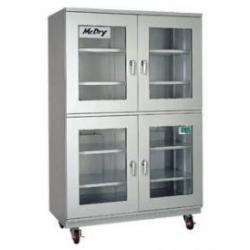
McDry MC-1002A four-door large-capacity dry cabinet for SMD reels and PCB assemblies

MC-1002A

Approx. 1,200 L

For cost-efficient bulk storage of SMD reels, component trays, IC packages and PCB assemblies with moderate access frequency.

View MC Series
MCU

Compact Cabinets for Smaller SMT Operations

Suitable for smaller SMT lines, prototype production, repair areas and low-volume electronic component storage where installation space is limited.

McDry MCU-201A compact dry cabinet for small-volume MSD storage

MCU-201A

Approx. 135 L

For small quantities of SMD reels, IC packages and moisture-sensitive electronic components close to the production or assembly area.

View MCU Series
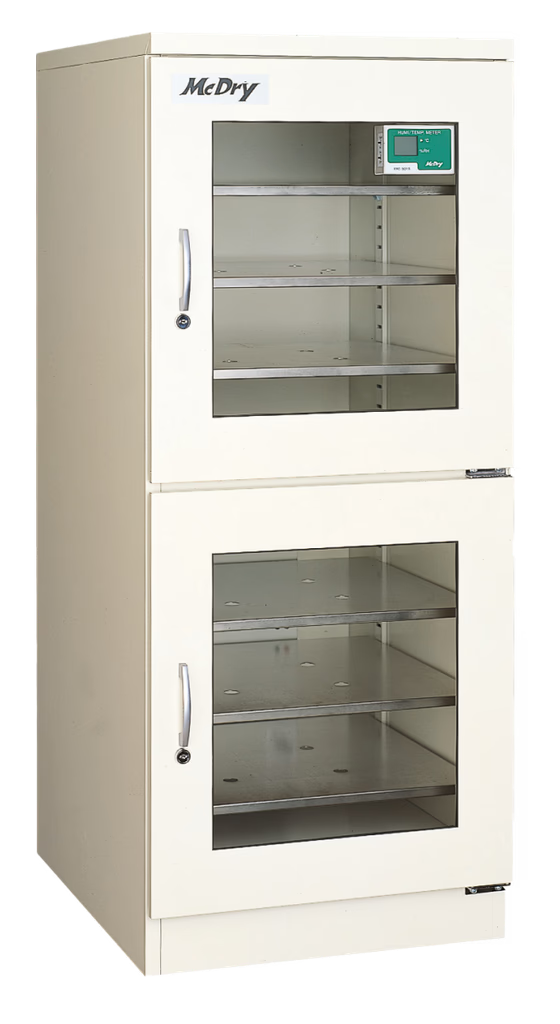
McDry MCU-301A compact two-door dry cabinet for SMT component storage

MCU-301A

Approx. 310 L

For smaller SMT production lines that need additional capacity for SMD reels, IC packages, component trays and other MSDs while maintaining a compact footprint.

View MCU Series
McDry MCU-401A compact three-door dry cabinet for moisture-sensitive electronic components

MCU-401A

Approx. 400 L

For growing SMT operations requiring more storage capacity and separated access for reels, trays and moisture-sensitive electronic components.

View MCU Series

Model selection depends on the quantity and type of MSDs being stored, cabinet access frequency, available installation space and the required storage environment. Seika Sangyo GmbH can help select the appropriate McDry cabinet for SMD reels, IC packages, PCB assemblies and other moisture-sensitive electronic components used in SMT production.

DXU, MCU models maintain 1%RH

Wide range of dry cabinets including CE models

Conforms to IPC/JEDEC J-STD 033D

Dehumidifies ICs to prevent micro-cracking

Alternative to baking, MBBs and nitrogen storage

Maintenance-free moisture absorption system

Digital RH meter included

ESD safe design

Benefits of McDry Dry Cabinets for SMT Production

McDry dry cabinets provide stable low-humidity storage for moisture-sensitive devices (MSDs), SMD reels, IC packages, PCB assemblies and other electronic components used in SMT production. In addition to humidity control, practical factors such as serviceability, humidity meter calibration, European stock availability and long-term operating effort can influence the total cost and reliability of an MSD storage system.

Feature McDry Typical Alternatives
MSD storage Designed for controlled low-humidity storage of SMD reels, IC packages, PCBs and other moisture-sensitive electronic components used in SMT production. Storage performance and suitability for MSD management depend on the cabinet technology, humidity range and production process.
Delivery time Selected McDry models and options are available from European stock, helping reduce lead time for SMT production projects and replacement requirements. Delivery time depends on manufacturer, cabinet model, configuration and regional stock availability.
Warranty McDry cabinets supplied by Seika Sangyo GmbH are generally covered by a 2-year product warranty from the SSG shipment date. Warranty periods and conditions vary depending on supplier, product and region.
Humidity meter calibration The humidity meter can be removed from the cabinet and calibrated or replaced separately, allowing humidity measurement to be serviced without replacing the complete dry cabinet system. Depending on the cabinet design, integrated humidity measurement systems may require different calibration or service procedures.
Dry unit serviceability The McDry dry unit is designed as a serviceable component and can be removed if inspection, repair or replacement becomes necessary. Service procedures and component accessibility depend on the individual drying system and cabinet construction.
Routine maintenance McDry uses a regenerating zeolite drying system. The desiccant is automatically regenerated during operation, helping keep routine maintenance requirements low. Maintenance requirements vary according to drying technology, filters, consumables and cabinet design.
Nitrogen consumption Standard low-humidity storage does not require a continuous nitrogen purge, which can simplify operation where the objective is moisture control. Systems based on continuous N₂ purging may generate additional gas supply, piping and operating costs.
SMT production access Multiple cabinet sizes and door configurations allow McDry systems to be selected according to component volume and access frequency, from small SMT operations to high-volume SMD reel storage. Cabinet suitability depends on available door configuration, internal capacity and recovery performance after door opening.
Floor-life management Controlled low-humidity storage can support MSD handling processes by limiting additional moisture absorption while components are stored between production steps. The effectiveness of floor-life management depends on the complete handling process, storage conditions and applicable component requirements.
Baking and rework risk Effective dry storage can help reduce unnecessary moisture exposure and support production processes intended to minimize repeated baking, component loss and moisture-related rework. Baking requirements and moisture-related production risk depend on component sensitivity, exposure history and the applicable handling procedure.
European support Seika Sangyo GmbH provides European sales and technical support for McDry, including cabinet selection, spare parts, service-related questions and humidity meter calibration. Local service capability, spare-parts availability and technical support structure vary by manufacturer and region.

Important: Low humidity and low oxygen are different requirements. McDry can provide dry storage without continuous nitrogen consumption, but applications that specifically require an inert or low-oxygen atmosphere may still require N₂ or another controlled-atmosphere solution.

One Dry-Storage Solution for Multiple Industries

Moisture-sensitive materials are used far beyond traditional SMT production.

McDry dry cabinets provide a controlled low-humidity environment for sensitive components and materials during development, production, intermediate storage and long-term preservation.

Select an application below to learn more about typical stored items, moisture-related risks and suitable storage conditions.

McDry dry cabinets support reliable dry storage in SMT production, battery development, aerospace electronics,
medical devices, research materials, powders and corrosion-sensitive parts.

Explore Other McDry Applications

McDry is widely used for the controlled low-humidity storage of moisture-sensitive electronic components in SMT and semiconductor production. The same dry-storage technology can also support selected applications in battery development, 3D printing, medical devices, aerospace electronics, optoelectronics, precision metal parts, AI hardware and data center electronics, and special materials.

Explore McDry applications beyond conventional SMT component storage.

McDry applications for battery components, 3D printing, medical devices, aerospace electronics, optoelectronics, metal parts, AI hardware and data center electronics, and special materials.
Application Typical stored items Main storage concern How McDry helps
Battery & Energy
Learn more
Battery components, electrodes, cell parts and selected battery-development materials Moisture absorption during development, assembly, testing and intermediate storage Provides controlled low-humidity storage for suitable moisture-sensitive battery components and materials
3D Printing
Learn more
Hygroscopic filaments, selected powders and additive-manufacturing materials Moisture absorption that can affect handling, processing, print quality or material consistency Provides controlled dry storage before materials are processed or returned to production
Medical-Device Components
Learn more
Sensors, diagnostic electronics, electronic assemblies and selected non-hazardous components Moisture exposure and storage stability before assembly, testing or use Supports controlled storage of suitable moisture-sensitive components used in medical-device production
Aerospace, Avionics & Defense
Learn more
Avionics, PCBs, RF modules, sensors, connectors and high-value electronic assemblies Long storage periods and moisture exposure of critical electronic components and spare parts Maintains a controlled dry environment for valuable electronic assemblies and components
Optoelectronics
Learn more
LEDs, OLED components, optical sensors, display components and other moisture-sensitive optoelectronic parts Moisture absorption and storage stability before assembly, testing or long-term preservation Provides controlled low-humidity storage for suitable moisture-sensitive optoelectronic components
Metal Parts & Corrosion Prevention
Learn more
Precision metal parts, tooling, mechanical components and corrosion-sensitive parts Humidity-related oxidation, rust and surface deterioration during intermediate or long-term storage Humidity-controlled storage can help reduce moisture exposure and support corrosion-prevention strategies
AI Hardware & Data Center Electronics
Learn more
AI accelerators, GPU-related semiconductor packages, high-density PCBs, memory components, optical modules and other moisture-sensitive electronics used in AI and data center hardware Moisture exposure during production, intermediate storage and long-term storage of high-value semiconductor and electronic components Provides controlled low-humidity storage for suitable moisture-sensitive AI hardware, semiconductor components and data center electronics
Special Materials & R&D
Learn more
Films, optical parts, polymers, selected research samples and other moisture-sensitive materials Material-specific moisture absorption, oxidation or changes in storage and processing characteristics Provides controlled dry storage where material compatibility, safety and required storage conditions have been confirmed
Material suitability must be confirmed before use.

Suitability depends on the material, packaging condition, target humidity, storage quantity and safety classification. Do not store wet or flammable materials or chemicals inside McDry. Please provide an SDS where applicable.

See McDry in Action

Discover how McDry ultra-low humidity cabinets protect moisture-sensitive components.


European SMT Support

McDry Support for SMT and MSD Storage in Europe

Seika Sangyo GmbH supports European electronics manufacturers using McDry for moisture-sensitive devices (MSDs), SMD reels, IC packages, PCB assemblies and other components used in SMT production. Support includes model selection, quotations, technical consultation, spare parts, humidity-meter calibration and after-sales service.

SMT-Focused Model Selection

Support is available for selecting cabinet capacity and configuration according to SMD reel volume, IC packages, PCB assemblies, component access frequency and available production-floor space.

Low-Maintenance Dry Storage

McDry uses a zeolite-based drying system with automatic regeneration, supporting continuous low-humidity storage for MSDs without requiring continuous nitrogen supply in standard moisture-control applications.

Serviceable Components

The humidity meter can be handled separately for calibration or replacement, while the dry unit can be removed for inspection, repair or replacement when required.

European Warranty & Spare Parts

McDry cabinets supplied by Seika Sangyo GmbH are generally covered by a two-year product warranty from the SSG shipment date. Spare parts and service support are available subject to model and availability.

Recommended Routine Checks

  • Calibrate the humidity meter periodically; annual calibration is recommended.
  • Replace the AA battery when the low-battery indication appears.
  • Check door seals, power supply and cabinet operating conditions as part of routine SMT storage control.

Need Help Selecting a McDry Cabinet for Your SMT Line?

Tell us what you store — SMD reels, IC packages, PCBs or other moisture-sensitive electronic components — together with your required capacity and access frequency. Our European McDry team can help identify a suitable cabinet configuration.

McDry FAQ for SMT and MSD Storage

Frequently asked questions about using McDry dry cabinets for moisture-sensitive devices, SMD reels, IC packages, PCBs and other electronic components used in SMT and semiconductor production.

What is McDry used for in SMT production?

McDry is used for the controlled low-humidity storage of moisture-sensitive devices (MSDs), SMD reels, IC packages, PCBs, sensors and other electronic components used in SMT and semiconductor production.

Dry storage helps limit additional moisture absorption while components are waiting for assembly, reflow, inspection or further production steps.

Why is low-humidity storage important for MSDs?

Moisture-sensitive electronic components can absorb moisture from ambient air during storage and handling. If absorbed moisture remains inside a package during reflow, rapid heating can increase the risk of moisture-related damage such as package cracking or popcorning.

Controlled dry storage is therefore an important part of MSD handling and floor-life management.

Is McDry suitable for IC packages, SMD reels and PCBs?

Yes. McDry is designed for low-humidity storage of moisture-sensitive electronic components, including IC packages, SMD reels, PCBs and other electronic parts.

The McDry operating instructions specifically identify IC packages and PCBs as applications requiring a low-humidity environment.

Can McDry support floor-life management?

McDry can support MSD handling processes by limiting additional moisture absorption while components are stored under controlled low-humidity conditions.

Floor-life control depends on the component classification, exposure history, storage condition and the applicable production procedure. McDry should therefore be used as part of the overall MSD management process rather than as a replacement for process control.

Can dry storage help reduce baking requirements?

Effective dry storage can help reduce unnecessary moisture exposure and may reduce the need for repeated baking in some production situations.

Whether baking is required depends on the component, moisture sensitivity level, exposure time and applicable handling procedure.

Does McDry require nitrogen for MSD storage?

No continuous nitrogen purge is required for standard McDry low-humidity operation. McDry uses an electrically operated zeolite-based drying unit that absorbs moisture and automatically regenerates the desiccant.

This can simplify dry storage where the primary objective is humidity control.

Low humidity and low oxygen are different requirements. Applications that specifically require an inert or low-oxygen atmosphere may still require nitrogen.

What humidity level can McDry provide?

McDry is designed for very low-humidity storage of moisture-sensitive electronic components.

The exact humidity performance and operating conditions should be confirmed for the selected McDry model and application.

What happens when the McDry door is opened during production?

Opening the cabinet allows ambient air to enter, so the internal humidity level can temporarily increase.

For SMT production, door-opening frequency should therefore be considered when selecting the cabinet size, model and door configuration. Frequently accessed SMD reels or IC packages may benefit from a cabinet configuration that limits unnecessary exposure of the remaining stored components.

Which McDry model is suitable for an SMT production line?

Model selection depends on the quantity of SMD reels, IC packages, PCBs or component trays being stored, as well as access frequency, available floor space and required storage capacity.

DXU models are typically considered where high storage capacity and frequent production access are important, while MC and MCU models provide alternative capacities and cabinet sizes for different SMT storage requirements.

How often should the McDry humidity meter be calibrated?

Periodic calibration is recommended to maintain confidence in the displayed humidity value. McDry documentation recommends annual humidity-meter calibration.

The humidity meter can be removed separately, which makes calibration or replacement easier without servicing the complete cabinet.

What maintenance does a McDry cabinet require?

McDry is designed for relatively low routine maintenance. The zeolite-based dry unit automatically regenerates during operation.

Routine checks should include the humidity meter, battery condition, door seals, power supply and cabinet operating condition.

What should I check if the cabinet humidity does not decrease?

First check that the cabinet is powered, the humidity controller and operating switch are correctly set, the doors are fully closed, and the humidity meter battery and calibration condition are acceptable.

Excessive door opening, damaged door seals or wet materials inside the cabinet can also prevent the humidity level from decreasing normally.

Who supports McDry for SMT customers in Europe?

Seika Sangyo GmbH supports European McDry customers with cabinet selection, quotations, technical questions, spare parts, options, humidity-meter calibration and after-sales service.

Support is available for SMT applications including SMD reel storage, IC package storage, PCB storage and other MSD handling requirements.

MCDRY SPECIALIST WEBSITE

Learn more about McDry ultra-low-humidity dry cabinets

Explore the complete McDry DXU, MC and MCU series, technical information and application guidance for moisture-sensitive components and materials.

Visit the McDry Specialist Website